How to Choose the Right Reed and Mouthpiece for Saxophone
Choosing a saxophone reed and mouthpiece is one of the most important steps in shaping your sound. The reed and mouthpiece work together as the “voice” of the instrument, directly influencing tone quality, ease of play, and overall comfort. At Popplers Music, we’re here to help you understand these essentials so you can find the best setup for your playing level and style.
Start with the Mouthpiece
One of the first things to know is that mouthpieces are interchangeable and can fit most saxophones. Even if a mouthpiece feels slightly loose or tight, adjustments can be made to the cork, so you can explore freely.
For beginners, a standard mouthpiece is the best starting point. For example, Yamaha recommends the 4C mouthpiece paired with a 2½ reed. This combination is ideal for practicing long tones and building a strong embouchure—the way your lips and muscles shape the sound. From there, students can experiment with different mouthpieces to find the tone that matches their taste.
Understanding Reed Thickness
The most important factor in reed selection is thickness, which is indicated by numbers ranging from 2 to 5:
- Thinner reeds (2 – 2.5): Brighter tone, easier to play, and excellent for beginners. Many jazz and pop players also favor this lighter sound.
- Thicker reeds (4 – 5): Produce a fuller, warmer tone but require more skill and breath control. These are preferred by more advanced players.
Reeds are consumable and need to be replaced often. To make things easier, many players now also try synthetic (resin) reeds, which last longer and require less maintenance.
Matching the Reed and Mouthpiece
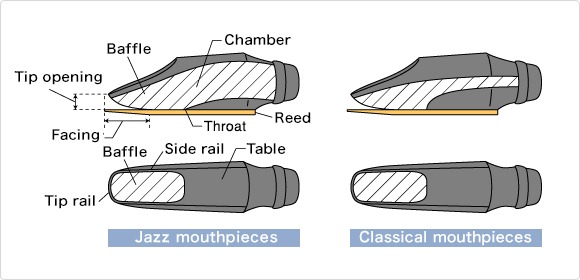
The key to a great sound is how the reed and mouthpiece work together. The “tip opening” of the mouthpiece (the space between the mouthpiece tip and reed tip) determines how air flows through the instrument.
- A narrow tip opening + thin reed can sometimes cause the reed to close off the air channel, cutting off the sound.
- A wide tip opening + thicker reed is harder to play but can create a richer, darker tone.
Advanced players often experiment with different combinations to achieve specific sounds, while beginners are best served with balanced setups that provide stability and consistency.
The Bottom Line
There is no single “perfect” reed and mouthpiece combination. It’s about finding what works for your playing style and skill level. Beginners should start simple, while experienced musicians can experiment to create their ideal sound.
At Popplers Music, we’ve been helping musicians for more than 100 years, and our staff understands the challenges of choosing the right gear. If you’re feeling uncertain, you don’t have to decide alone. We’re always ready to guide you.
👉 Have questions or need recommendations? Call us at 701-732-0333 (Grand Forks) or 605-361-3660 (Sioux Falls), or email [email protected]. You can also explore our full selection of reeds and mouthpieces at www.popplersmusic.com.